 Y8 Games
Y8 Games – The Ultimate 2025 Guide
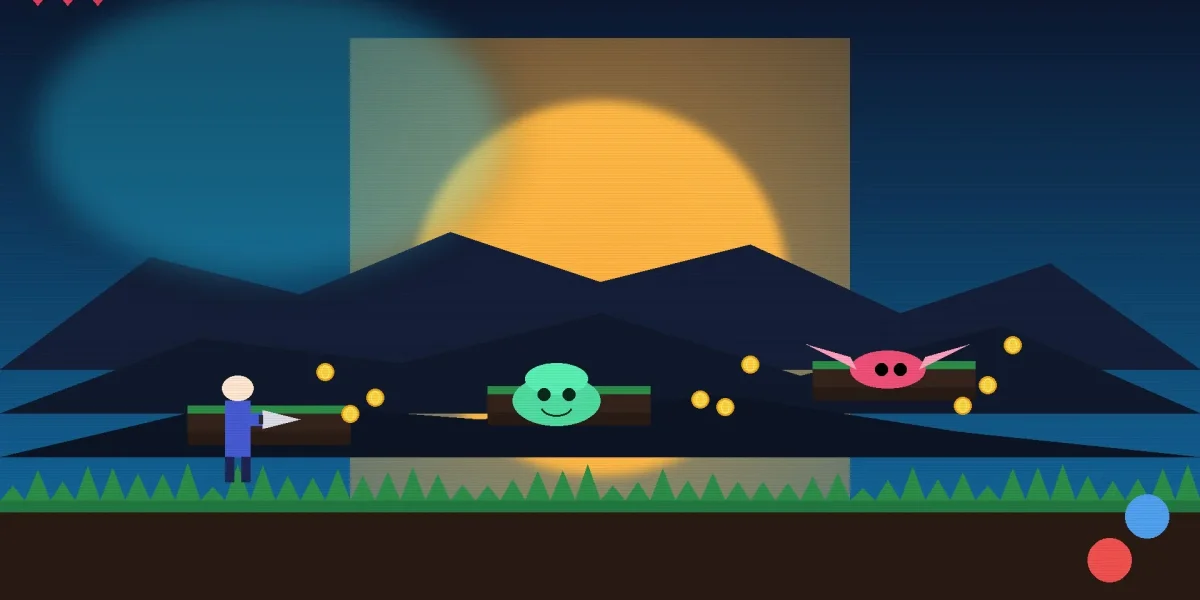
If you love fast-loading, free-to-play browser titles you can jump into in seconds, Y8 Games is your new home base. From quick-fire arcade challenges to deep builders and clever puzzlers, Y8’s catalog makes it effortless to find a game that matches your mood—no installs, no paywall to get started, and no clutter. The magic is in the variety: one moment you’re threading a pixel-perfect jump in a reflex platformer, and the next you’re scaling up production lines in a laid-back idle builder. That range lets you snack on fun during a coffee break or sink an hour into a progression loop that feels surprisingly rich for a browser game.
Whether you’re a beginner dipping your toes into casual titles or a seasoned player looking for score-chasing perfection, you’ll find curated tags, clear descriptions, and simple controls that just make sense. Most games are designed to be instantly readable—WASD/arrow keys, space, click/tap—so you’re learning the meta, not memorizing a manual. And because everything runs in the browser, you can swap devices and keep the vibe going: laptop at the desk, tablet on the couch, quick taps on a phone while waiting in line.
Want an easy starting point with popular, high-replay picks? Play Y8 Games (https://www.y8.org.es/tag/y8-games) now on https://www.y8.org.es.
Understanding Y8 Games 🔍
At its core, Y8 Games is shorthand for pick-up-and-play browser experiences that load quickly, emphasize immediate fun, and scale their challenge as you improve. These games run directly in modern browsers using HTML5/WebGL, which means smooth performance, responsive input, and compatibility across desktop and mobile devices. Because they’re so lightweight, you don’t need expensive hardware or a lengthy onboarding process—click, play, iterate, improve.
What really defines the platform is breadth. You’ll see kinetic arcade loopers, timing-based platformers, cozy builders, card-driven strategy sandboxes, and everything in between. Many games lean into short sessions with instant restarts, which subtly encourages mastery: you try a route, fail fast, and immediately apply micro-adjustments. Others embrace steady, satisfying progression where each session pays forward—more cards unlocked, better production chains, smarter layouts, higher multipliers.
In industry terms, these experiences live under the umbrella of browser games, as defined by Browser game. That classification captures their key advantages: frictionless access, universal reach, and the ability to deliver surprising depth without a download. Put simply, Y8 delivers that “one more run” feeling in a format that fits your day, not the other way around.
Controls & Gameplay in Y8 Games 🎯
Step-by-step to your first win:
-
Pick a genre that matches your mood. Want to chill? Try builders and idlers. Craving adrenaline? Platformers and quick-reflex arcades bring instant heat.
-
Scan the controls panel. Most games use keyboard arrows/WASD for movement, Space for jumping/confirm, and mouse/touch for aim and actions. On mobile, you’ll see on-screen buttons mapped the same way.
-
Play the tutorial round. The first level is often a soft tutorial—watch for subtle prompts, glowing hints, or highlighted UI elements.
-
Identify the win condition. Is it score/time-based? Reaching an exit? Building a stable economy? Knowing what counts as “success” avoids wasted motion.
-
Iterate quickly. Browser games shine at instant restarts. Failure is feedback: adjust your timing, route, or build order and try again.
Common modes you’ll bump into:
-
Arcade / Survival: Endless or stage-based runs where the pace ramps up until you make a mistake.
-
Platform / Precision: Short, focused levels testing timing, jump arcs, and consistency.
-
Builder / Idle: Systems-first games where compounding improvements and automation are the reward.
-
Card / Strategy: Light deck-style or set-collection mechanics that unfold into rich decision spaces.
HUD & feedback essentials:
-
Meters and timers tell you when to push or play safe.
-
Combo counters reward streaks—maintain rhythm for exponential gains.
-
Currencies/resources power upgrades; learn which upgrades accelerate everything else.
-
Audio cues often telegraph hazards or perfect-timing windows—use them.
Controller tips: While most titles are optimized for keyboard/mouse or touch, some also feel great on a gamepad mapped via your browser/OS. If a game supports it, you’ll usually see a prompt; otherwise, keyboard remains the gold standard for precision.
Top Tips & Strategies 💡
For beginners
-
Start with clarity. Before your first move, read the objective and spot the fail state. Clarity beats speed.
-
Master the “primary action.” In platformers, it’s the jump arc; in builders, it’s placement efficiency; in card games, it’s draw/hand tempo. Get that one mechanic crisp first.
-
Short sessions, high learning. Play in 5-10 minute blocks with a single focus (“beat Level 3 without damage”). Small goals stack into big progress.
For intermediate players
-
Route before execution. In precision games, do a “ghost run” with safe movements to memorize hazards. Then layer speed.
-
Economy snowballing. In builders/idle games, prioritize upgrades that reduce friction (automation, batch actions, multi-queue). Those unlock everything else sooner.
-
Breakpoints & thresholds. Many systems hinge on hitting a certain value (e.g., production per minute) that flips the entire pacing. Aim for those inflection points early.
For advanced players
-
Micro-optimizations. Track time-to-action: how many inputs per success? Trim unnecessary steps, buffer inputs during transitions, and use corner-case mechanics (edge-grabs, slide-cancels) where supported.
-
Score theorycraft. If a game multiplies combo × time × accuracy, decide which pillar you’re maximizing this run, and play to that scoring model.
-
Meta progression planning. Some games gate late-game content behind early choices. Prototype multiple builds/routes to discover the fastest unlock path.
Universal mental model
-
Information → Decision → Execution → Review. After each run, ask: What did I know? What did I decide? How did I execute? What will I try differently? That loop turns casual play into reliable improvement without grinding.
What Keeps Players Hooked 🔄
Browser-first design gives Y8 Games a built-in loop of discovery, mastery, and surprise. Quick load times reduce friction, so you chase flow instead of waiting screens. The best titles dial in a gentle difficulty curve that invites experimentation—tight enough to be engaging, generous enough to keep you trying “just one more time.” Rewards arrive fast (new levels, cards, unlocks), but there’s usually a deeper layer—hidden routes, efficient blueprints, multiplier synergies—that only reveals itself after a handful of runs.
Another sticky factor is session flexibility. Games feel complete in 2–3 minutes, yet scale to hour-long marathons if you want to optimize. Because progress is often skill-based rather than grind-gated, you’re improving even when you’re not collecting a currency. Add in leaderboards, personal bests, or cozy long-build loops, and you’ve got a platform that respects your time while making it dangerously easy to play again—and again.
Similar Games You’ll Love 🧭
🎮 Try Next: Factories
If you enjoy the zen satisfaction of turning a trickle of resources into a humming production network, Factories is your happy place. It starts simple—place a gatherer, feed a processor, ship the output—but the pleasure comes from reducing inefficiency and watching your lines snap into rhythm. Early upgrades focus on throughput, but the real mastery is layout: minimize travel distance, align flow with bottlenecks, and chain improvements so every new machine lifts the whole system. That’s what gives idle-adjacent builders their staying power: you’re architect and operator at once, nudging a small idea into a thriving economy. For a smooth entry point and a clean upgrade cadence, try Factories – Build, Automate & Grow on Factories—a smart pick when you want progress you can feel without micromanagement overload. The learning curve is forgiving, the late-game unlocks are meaningful, and the loop is endlessly tinker-friendly.
🕹️ Free Play Fun: Mineblocks
Mineblocks captures the joy of discovery in a 2D sandbox: punch, place, craft, survive. Where it shines is the readability—blocks are visually distinct, recipes are intuitive, and movement has that just-right floatiness that makes building and exploring feel good minute-to-minute. The first session is about safety (shelter before night), but once you’ve got essentials, the world opens into creative expression: vertical mines, sky bridges, underground farms, quirky redstone-style contraptions. If you like goals, set self-challenges (biome tours, boss hunts, mega-builds). If you prefer vibes, build a cozy base and refine it over time. The result is a playground that respects both planners and improvisers. Jump in at Mineblocks and you’ll quickly see why block-based adventures remain perennial favorites: gentle challenge, infinite possibility, and a satisfying rhythm of gather-craft-upgrade-repeat.
🏆 Fan Favorite: Stacklands
Card-based building sounds niche until you feel the click of a perfect combo. Stacklands turns settlement management into a tactile puzzle where every card you place unlocks new synergies. Food, villagers, materials, and blueprints all exist as cards, so your “city planning” is literally a table arrangement puzzle. The early game is about survival and space; the mid-game rewards engine building and efficient stacks; the late game is a playground for optimized loops and clever discoveries. What keeps you hooked is how often the game surprises you—new recipes, event cards, and emergent interactions that reframe your strategy. It’s snackable, yet deep enough for hours of experimentation. If you’re curious how deck-like mechanics can power a builder without the bloat, deal yourself in at Stacklands—a brilliant demonstration of how constraint can create creativity.
🎢 Arcade Thrills: JumpDude
Sometimes you just want to move. JumpDude is all about precision, flow, and that delicious snap of a clean input. The level design leans on readable hazards, tight checkpoints, and patterns that beg to be mastered. New to precision platformers? Focus on three fundamentals: hold vs. tap (for jump height), momentum preservation (don’t over-correct mid-air), and rhythm (commit to a cadence; panic tapping kills runs). Experienced players will find routes to shave frames—edge jumps, buffered inputs, micro-slides—feeding a satisfying chase for PBs. It’s the perfect palate cleanser between heavier titles, and an ideal “five minutes became fifty” trap. Lace up and aim for perfect runs in JumpDude—a slick, retry-fast platformer that rewards calm hands and a good ear for timing.
🌐 Browser Spotlight — Wave
Minimalist looks, maximalist focus. Wave tests spatial awareness and split-second decision-making as you thread a moving shape through increasingly tricky patterns. The secret sauce is anticipation: learn the spawn cadence, position early, and treat sharp changes as choreography, not chaos. Because runs are short and feedback is immediate, improvement is obvious—you feel when your reads get better and your inputs get cleaner. It’s also a fantastic warm-up game: five minutes here will sharpen your aim and reaction time for anything else you play. When you want a clean, elegant arcade loop with endless ceiling, press start on Wave and ride the line between control and panic. You’ll chase just one more attempt, guaranteed.
Benefits of Playing on https://www.y8.org.es 🌐
Speed, safety, and selection: pages are lightweight, the catalog is broad, and the play buttons are front-and-center—no distractions, no detours. Each game page puts essential info (controls, goals, quick tips) where you need it so you’re playing—not hunting for help. With mobile-friendly layouts and keyboard-first design, you can stay casual or go competitive without friction. Bookmark your favorites, bounce between genres, and let the tags guide you to something fresh whenever you’ve got a spare moment.
Ready to start? Play Y8 Games (https://www.y8.org.es/tag/y8-games) now.
Final Thoughts on Y8 Games 💭
The best browser games don’t waste your time—they turn it into fun. Y8 Games nails that philosophy with quick access, clear goals, and loops that reward both curiosity and skill. Some sessions are about comfort—tidying a factory layout, perfecting a cozy base. Others are about thrill—threading a tight jump sequence or squeezing through an impossible-looking pattern. Across genres, you feel yourself getting better, not just accumulating numbers.
If you want a platform that respects your attention and fits any schedule, you’ve found it. Set a small goal, hit play, and let short sessions stack into surprising mastery. Your next favorite five-minute obsession is probably one click away.
FAQ ❓
Q1: Do I need to download or install anything to play Y8 Games?
A: No—titles run directly in your web browser using modern web tech. Just open a game page and press play. On mobile, games present touch controls automatically.
Q2: Which devices work best?
A: Any modern desktop, laptop, tablet, or phone with an up-to-date browser will do. If you’re chasing precision scores, a keyboard on desktop offers the tightest control; for chill builders, touch is perfectly comfy.
Q3: How do I find games that match my skill level?
A: Use tags and descriptions to pick a baseline: “easy,” “casual,” or “endless” for warm-ups; “precision,” “hard,” or “survival” for a challenge. Start at normal difficulty, then ramp up as you master the core mechanic.
Q4: Can I improve quickly without grinding?
A: Absolutely. Lean into instant restarts: treat each run as a focused experiment (change one variable at a time—route, timing, or upgrade order). This keeps learning high and frustration low.
Q5: What should I play first if I only have 10 minutes?
A: For a cozy session, Factories and Stacklands are great; for a reflex snack, try JumpDude or Wave. Want open-ended creativity? Mineblocks never runs out of ideas.