 Y8 Games
Knife Games
Knife games turn a familiar object into several different browser challenges. This collection contains throwing titles alongside other blade-themed arcade games, so the first useful choice is the interaction you want to practice.



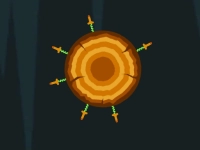




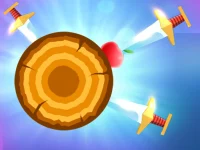







A tap that sends a knife toward a target is a different task from controlling a blade through a continuous movement. Open the individual game instructions before assuming that every card follows the same rules.
Start with a clear throwing challenge
Knife Hit Challenge provides a focused example: click or touch to throw, work with the available supply of blades, and avoid other blades and obstacles. Its diamonds can be used to buy knives. The important decision is when a throw will advance the level rather than simply add another input. Watch the landing opportunity before acting and check what changed after the blade arrived.
A useful first session starts slowly. Release one knife, watch its path, and identify the immediate result. If the attempt fails, work out whether you acted too early, aimed into an occupied route, or made an unintended additional input. These are separate problems. Recognizing the actual cause gives you a specific adjustment to try instead of responding to every mistake with faster clicking.
Compare the objective before choosing another game
The collection also includes Knife Hitting Throw Knife Hit Target. Its page describes throwing at rotating targets, collecting coins for knives, and a Hard Mode with a stated hundred levels. Those details belong to that title; they are not a promise that every knife game here uses the same level count, currency, or progression. Compare each game's own instructions when deciding what to try next.
For target throwing, look for how movement affects the moment of impact. An opening may be visible now but become unsafe by the time a blade reaches it. The practical skill is following the target's present arrangement, especially after earlier throws have added obstacles. If a familiar rhythm stops working, observe the new situation rather than continue the same pattern simply because it succeeded at the beginning.
Choose a practice goal that fits the game
Players seeking precision can focus on reducing wasted throws. Players exploring a new title can first learn its input and failure condition. If the game offers progression, a clean completion may be a more useful goal than collecting every visible bonus immediately. Keep optional rewards separate from the requirement that ends the level. A reward near a difficult obstruction deserves a fresh decision rather than an automatic attempt.
Use the knife throwing guide for a structured approach to observation, deliberate inputs, and reviewing misses. Its advice explains how to practice a throwing challenge without assuming a universal speed or secret sequence. When you move to another title, carry over the habit of observing feedback while relearning that game's specific controls.
Read the screen and protect useful feedback
Keep the important target area visible. A finger covering the landing point or an uncomfortable desktop click can make an otherwise simple interaction difficult to judge. Choose one input method while learning so that you can compare attempts fairly. Wait for the play screen to finish loading, and distinguish inconsistent responsiveness from a deliberate change in the challenge. A stable view makes it easier to understand why a throw worked.
Short attempts are valuable when they answer a question. You might learn that waiting for an obstruction to clear works better than using a fixed tapping rhythm, or that the last blades require more care because the target is crowded. Keep the lesson specific. The collection is best explored by finding a game whose decisions you enjoy, then making those decisions more repeatable through observation rather than treating every blade-themed card as an identical test.