 Y8 Games
Mastering the Art of Parkour in Puzzle Games
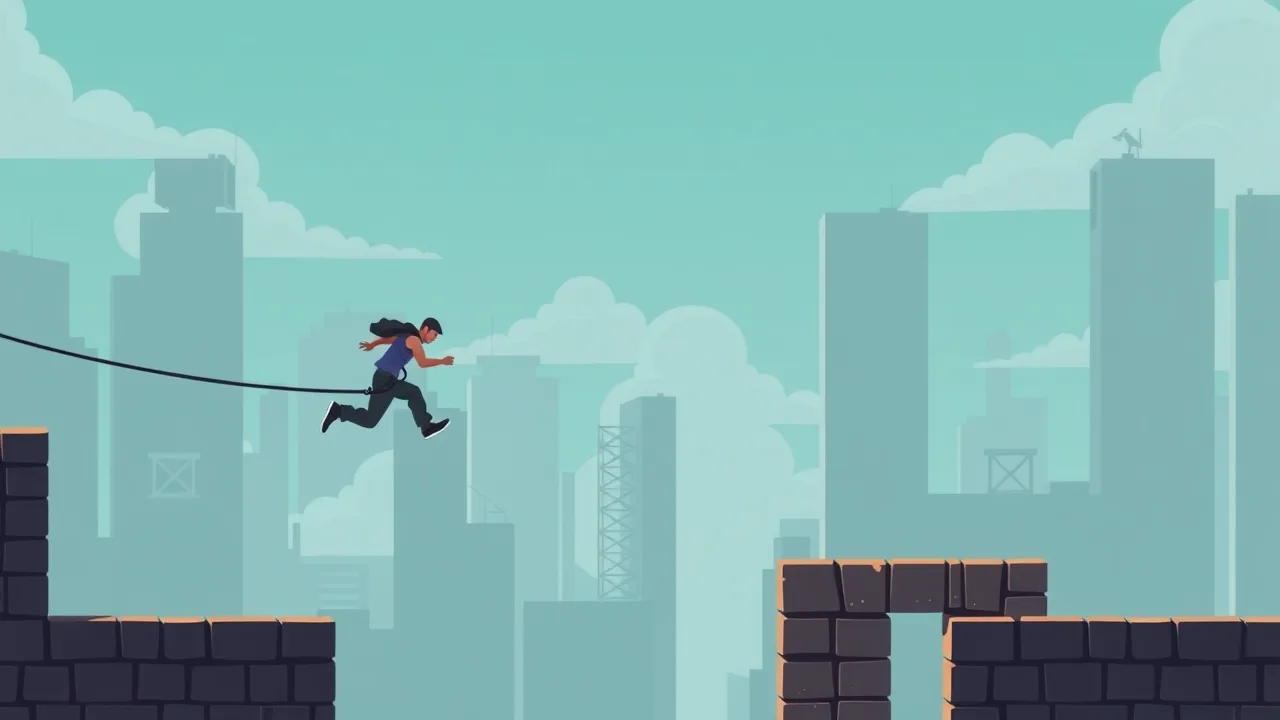
Welcome to the world of Parkour, a unique fusion of brain-teasing logic and high-octane movement. This title reimagines the puzzle genre by requiring players to think on their feet, quite literally. By combining spatial reasoning with momentum-based challenges, the game offers a refreshing break from traditional static puzzle solving. It invites you to navigate complex environments where the solution isn't just finding an item, but mastering the flow of movement itself.
At its heart, this game challenges you to traverse obstacles using momentum and timing. Unlike standard logic puzzles where you might click buttons or arrange tiles, here the solution involves kinetic energy. You must calculate the force required to jump gaps, wall-run across vertical surfaces, and slide under barriers. The controls are designed to be intuitive, allowing you to focus on the path ahead rather than struggling with complex inputs. Mastering the jump and slide timing is crucial for progressing through the increasingly difficult levels.
| Feature | Details |
|---|---|
| Gameplay Style | Hybrid Puzzle-Platformer |
| Primary Focus | Momentum and Spatial Logic |
| Session Pace | Fast-paced with strategic pauses |
| Device Fit | Optimized for mobile and desktop browsers |
| Challenge Type | Environmental Obstacles |
Strategies for Conquering Obstacles
Success in this game relies heavily on observation. Before you hit the start button for a run, take a moment to scan the environment. Look for visual cues that indicate a wall-run surface or a breakable barrier. Often, the solution isn't the most obvious path. You might need to chain a double jump into a wall slide to reach a hidden platform. Developing a rhythm is key; hesitation often leads to failure, so commit to your moves once you have a plan.
The Importance of Visual Cues
The game uses distinct color palettes and lighting to guide the player. Interactive elements that can be climbed or swung from are often highlighted, while hazards are clearly marked. Learning to read these visual signals quickly will drastically improve your reaction time. Pay attention to the edges of the screen as well, as the next part of the puzzle often hints at the required direction of travel. This visual language makes the game accessible while maintaining a high skill ceiling.
Progression and Difficulty Curve
The difficulty curve is carefully balanced to introduce new mechanics gradually. You will start with simple jumps and slides, but soon the game will introduce moving platforms and crumbling floors. Each level builds upon the skills learned in the previous one, ensuring that you are never overwhelmed by a sudden spike in difficulty. This structured progression helps players build confidence and muscle memory, making the complex later stages feel rewarding rather than frustrating.
Why Momentum Matters in Logic
Traditional puzzles are often static, requiring you to stop and think. This game flips that concept by making movement part of the solution. You have to think several steps ahead, visualizing your trajectory before you even move. It turns physics into a puzzle element, where gravity and inertia are tools you can manipulate. This dynamic approach keeps the gameplay fresh and engaging, appealing to players who enjoy both action and cerebral challenges.
Optimizing Your Play Style
While rushing is sometimes necessary, reckless speed can lead to repeated failures. The best approach is a blend of speed and caution. Identify the safe zones within a level where you can pause briefly to reassess. Use these moments to plan your next sequence of moves. If you find yourself stuck on a specific section, try changing your approach; sometimes a wall jump is faster and safer than trying to make a long horizontal leap. Experimentation is the key to finding the most efficient route.
Frequently Asked Questions
**Is this game suitable for beginners?** Yes, the early levels serve as a comprehensive tutorial that teaches you the basic controls and mechanics without being punitive. It is designed to be accessible to everyone.
**Does the game require fast reflexes?** While speed is helpful, the game is classified as a puzzle game because it emphasizes planning. You can often take your time to figure out the solution before executing the moves.
**Are there any in-game purchases?** The game is designed to be played directly in your browser. It focuses on the core gameplay experience of solving puzzles through movement.
**Can I play this on mobile?** Absolutely. The game is fully responsive and works great on touchscreen devices, allowing for swipe gestures to control movement.